Across Saskatchewan this season, physical education teachers traded clipboards for sliders and brooms through Curling Canada’s Teachers Pilot Program, designed to strengthen school curling by giving educators the confidence and tools to bring their classes on-ice and lead after-school programs at local curling centres.
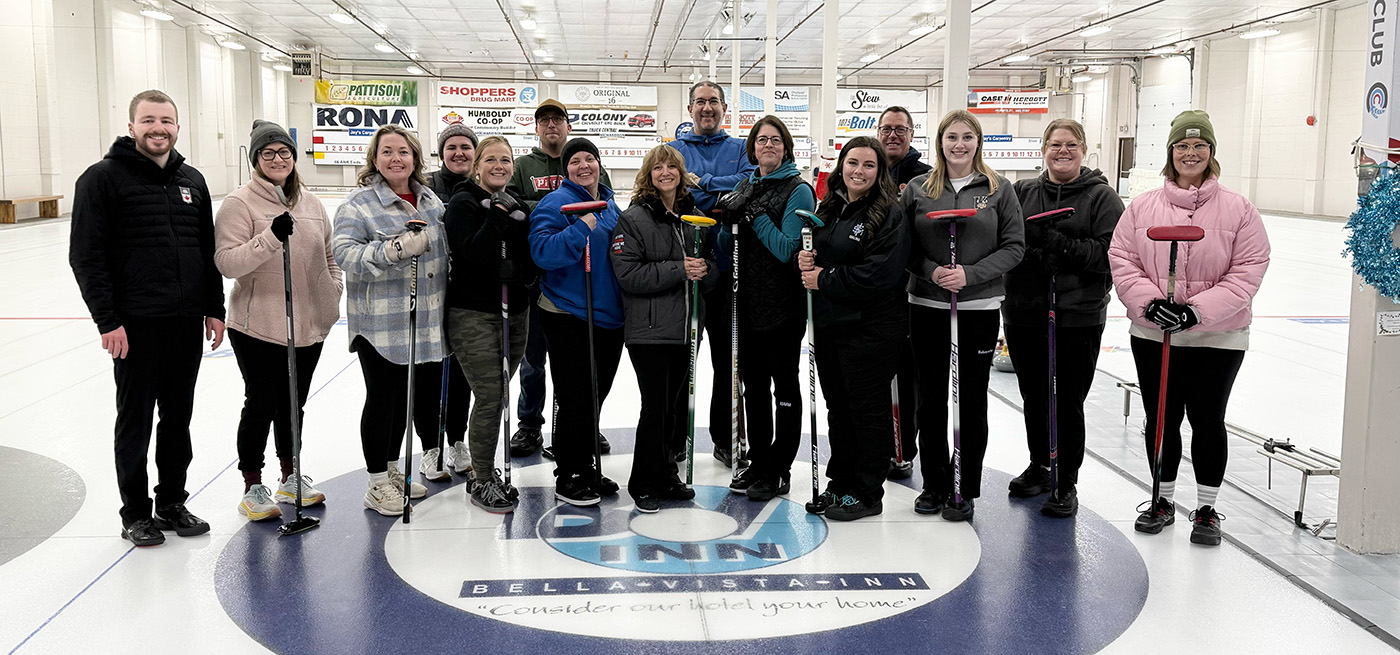
Led by facilitator Barb Owens, the pilot project delivered four Professional Development workshops in Assiniboia, Humboldt, Yorkton and Outlook during the 2025-26 season. In total, 44 teachers and school staff from communities across Saskatchewan participated, learning foundational curling instruction rooted in Curling Canada’s Long-Term Curler Development (LTCD) model.
“The ultimate goal of the program is to provide physical education teachers with the knowledge, skills and confidence to take their physical education classes curling,” said Owens. “It is a curriculum-aligned activity for their students and athletes.”
The sessions combined approximately one hour of on-ice instruction with an additional hour of off-ice learning and discussion. Teachers worked through safety procedures, the four stages of delivery, sweeping technique and strategy, and explored ways to apply curling instruction within Saskatchewan’s physical education curriculum.
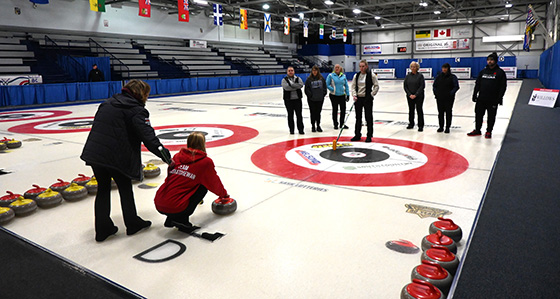
Owens, a substitute teacher with Prairie South School Division who holds a Bachelor of Education and Competition Coach certification, brought years of coaching experience to the project, including work at the high school, provincial and national levels.
Participants travelled from communities across the province to attend, including Gravelbourg, Coronach, Melfort, Prince Albert, Melville, Canora and Loreburn. The strong turnout reflected growing interest among educators looking for new opportunities to engage students through school curling and keep them involved in the sport.
“Participants were very receptive to learning the latest in curling instruction to share with their students and teams,” Owens said. “The fact that so many participants travelled to attend is an indication of the desire of teachers to expand their knowledge and skills in this area.”
The program was intentionally designed to remove barriers for teachers. There was no cost for participants, equipment was provided when needed, and the workshops created an accessible, hands-on learning environment for instructors with varying levels of curling experience.
“Through this season’s pilot Professional Development sessions across Saskatchewan, we empowered teachers with the skills, confidence, and curriculum-aligned tools to deepen curling knowledge in their on-ice school curling programs,” said Curling Canada’s Manager, Youth Development & Programming, Dustin Mikush. “By combining on-ice experience with guided instruction rooted in Curling Canada’s Long-Term Curler Development (LTCD) model, we are creating stronger pathways for Youth Development, strengthening leadership capacity, and building the greater system.”
The sessions made an immediate impact on participants and school leaders alike.
“I really enjoyed the professional development opportunity hosted by Barb Owens,” said Tyrel Bertram of Mossbank School. “The learning experience was engaging, practical, and directly applicable to my curling coaching needs.”
Bertram added that the on-ice component allowed teachers to work through drills and techniques in real time, creating a valuable learning experience that could be transferred directly to school programs.
Amanda Kornaga, Superintendent of Schools with Good Spirit School Division, said the clinics helped make curling more accessible to educators while supporting high-quality physical education programming.
“The clinic not only increased confidence in teaching curling, but also provided ready-to-use ideas that can be implemented immediately in school gymnasiums and community settings,” Kornaga said.
For Curling Canada, the pilot project represented more than a single-season initiative. The program was built around lasting sustainability through equipping teachers with the tools to introduce more students to the sport and strengthen relationships among schools, curling centres and local communities.
That momentum is already continuing, with the program expanded in Year 2 to include locations in Saskatchewan and Alberta, Owens said.
By investing in educators and building confidence at the school level, the Teachers Pilot Program is helping create new pathways into curling, one classroom, one teacher, and one community at a time.
Additional details about Curling Canada’s youth programs can be found by CLICKING HERE or by contacting your Member Association Youth Development Council representative.