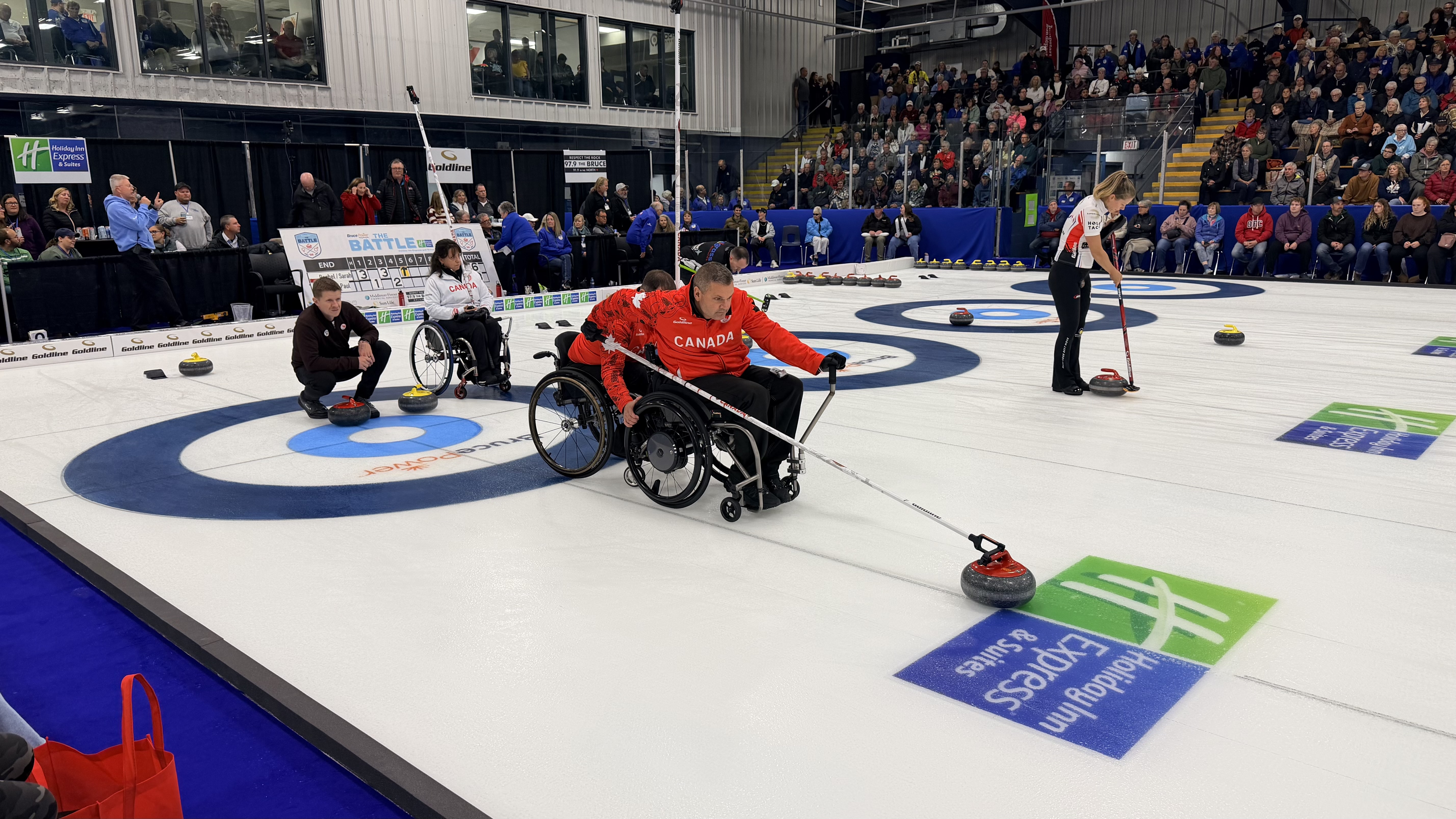
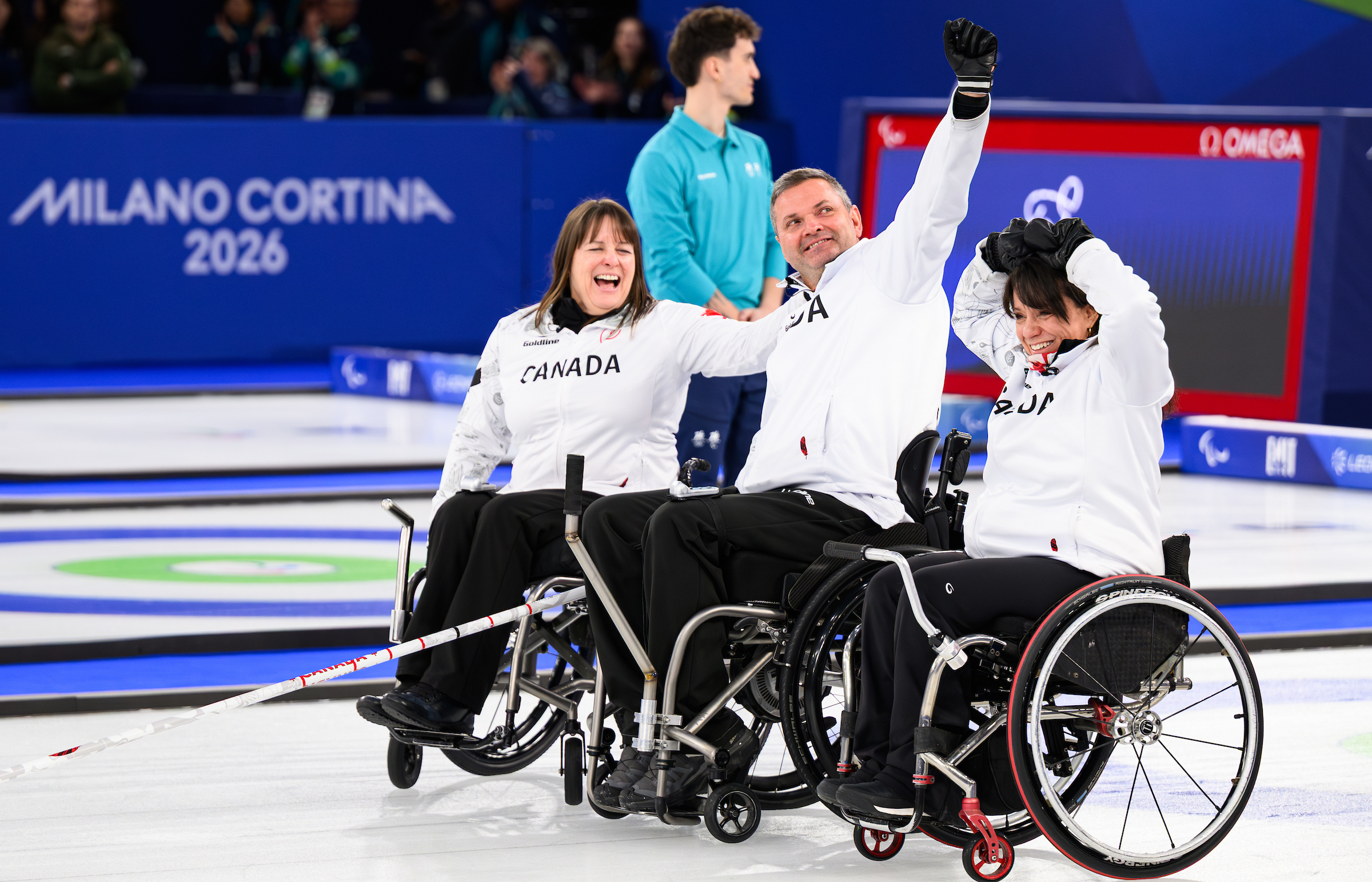
There couldn’t have been a more nail-biting finish in the wheelchair curling mixed team event at the Milano Cortina 2026 Paralympic Games. With only seconds to go, Team Canada’s skip, Mark Ideson, made a perfect tap to score the winning point and take home the gold medal.
The thrilling 4-3 win over Team China capped off a historical undefeated week for the team made up of Ideson, vice-skip/third Jon Thurston; second Ina Forrest; lead Collinda Joseph; and fifth Gilbert Dash and marked the first gold medal for Canada in the event since 2014.
Canada’s dominant performance and dramatic final game had everyone talking about wheelchair curling.
“The fact that it was the cool sport at the Games this year was really exciting,” said Kyle Paquette, Director of Wheelchair Curling at Curling Canada.
Since 2022, CBC Gem has livestreamed both the Olympics and Paralympics, something Paquette says helped widen the exposure.
“I think it did catapult off the Olympics being showcased and viewed primarily through the Gem app,” he said. “People just stayed on it for the Paralympics and realized, ‘Wow, there are some really cool and exciting sports, and wheelchair curling is one of them.’”
The buzz builds on the momentum of Curling Canada’s Grow the Game campaign, which encourages curling associations, curling clubs, and individuals across the country to make a pledge to grow the sport.
Jennifer Chase, a curling coach at the Lakeshore Curling Club in Lower Sackville, N.S., part of the greater Halifax area, made a pledge to grow the sport in any way possible and help make it more inclusive.
She achieved her goal by coaching a new wheelchair team, introducing new Special Olympics athletes to the game, and making plans to recruit even more members for next season.
“Everyone deserves to be included in curling. Everyone has a right to play, and curling is so easy to adapt,” said Chase.
To grow the game in an inclusive way, Chase believes it’s more than just saying everyone is welcome.
“It’s making them feel welcomed with events where they can be themselves and showing them how a club can accommodate them. It’s not about the potential curler adapting to the club to fit in; it has to be the club working to make them fit in,” she added.
Expanding the sport in Nova Scotia
Jill Brothers, Technical Director with Nova Scotia Curling and third rock thrower on Team Christina Black, is also actively involved with growing wheelchair curling in the province.
The Lakeshore Curling Club historically has had the most wheelchair curlers in Nova Scotia, but Brothers noticed a couple of years ago that the province wasn’t sending anyone to compete at the National Championship and wanted to do something to change that.
She worked with wheelchair curler Laughlin Rutt (who won the Nova Scotia Wheelchair Curling Championship in March for the ninth time) and coach Stewart Slauenwhite to offer a one-day camp for curlers and coaches. About 12 people attended, including a wheelchair curling team who drove down from Cape Breton, as well as others who were brand new to the sport.
“There was one woman, full of excitement and life, who had never seen curling ice before. She came in, looked at the ice, and said, ‘I know I’m going to love this.’ Now, she’s on her second trip to nationals,” said Brothers.
They held a similar camp a year later with floor curling equipment at a Halifax tennis club. The participants have now formed a full wheelchair curling team. It meant Nova Scotia went from having no teams competing for a spot to represent the province at nationals to three, with the hope of adding a fourth team next season.
They held another camp last October, where participation doubled.
“It was a huge leap again—new curlers, older curlers, coaches, and support people,” said Brothers. “It was so thrilling. Then to have [National Wheelchair Curling Program coach] Dana Ferguson come down from Alberta for a one-day event… she taught the group so much, and it was a really fun day.”
Brothers said having the Montana’s Canadian Curling Trials and Festival of Rings (a city-wide event to make the sport more inclusive and accessible with activities such as floor curling) in Halifax last November, followed by Curling Day in Nova Scotia, helped build some momentum for the sport across the province. She also hopes to leverage the success of Team Canada at the Paralympics to attract new people to the sport next season.
She adds the wheelchair curlers are also doing a great job of marketing the sport.
“We’ve just got an awesome group who are passionate and full of life to grow this game,” said Brothers.
Growing wheelchair curling across Canada
Growing wheelchair curling in Canada requires getting the word out to potential new curlers as well as having accessible curling clubs, programs, and equipment, added Paquette.
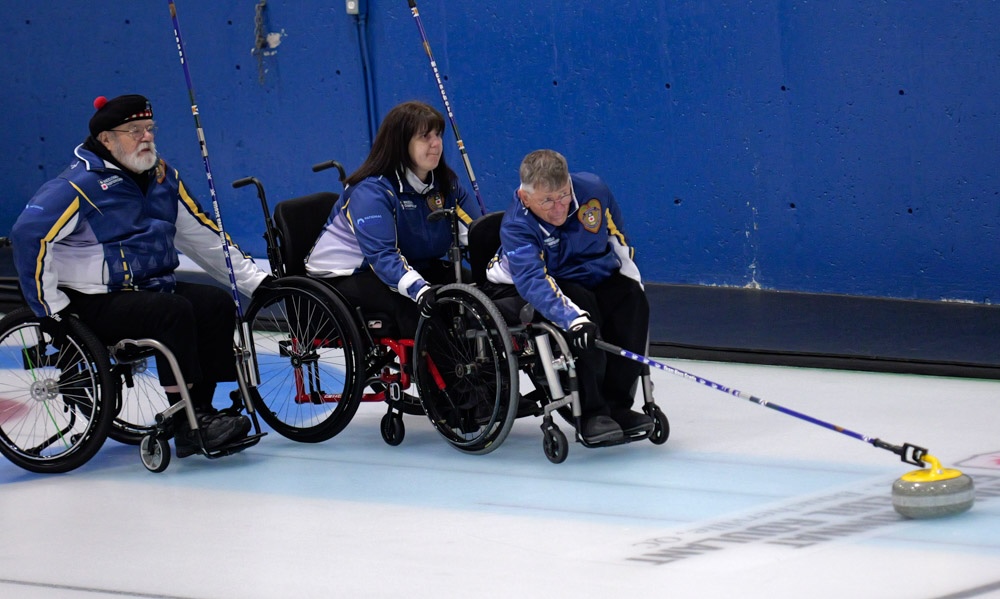
A new partnership with Goldline has meant there is now a commercially available wheelchair curling delivery stick. Prior to this, many curlers were going to hardware stores looking for extendible poles or forced to innovate in their garages.
“That was part of the subculture of wheelchair curling for many years. So having commercially available heads and sticks has been a real exciting progression with the sport,” said Paquette.
Other initiatives include piloting integrated leagues with both wheelchair curlers and able-bodied curlers, which was showcased at the inaugural Grand Slam of Curling Wheelchair Invitational in September and the Rock League event in Toronto in April.
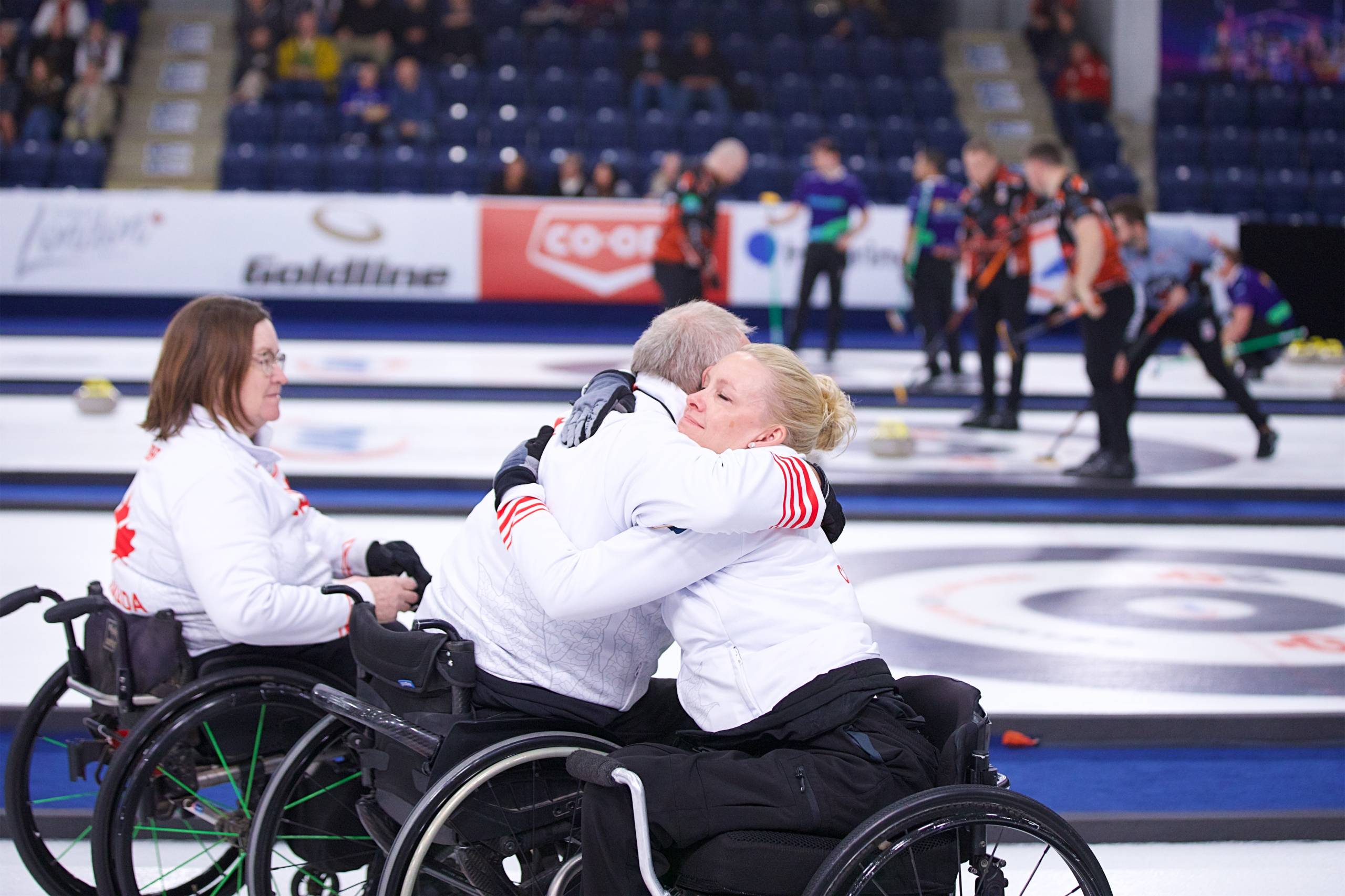
“It’s a strategy that could lead to accelerated growth with the sport,” said Paquette.
He is also leading a national working group to expand wheelchair curling, which includes supporting clubs, associations, and local programs and continuing to grow the community.
“If somebody were to ask me like what I think the greatest accomplishment is of this last quadrennial, it’s definitely not the gold medal … it’s the fact that we’ve been able to bring together the community of wheelchair curlers and coaches, the growth of that community, and how tight that community is,” said Paquette.
Stick curling is also popular across the province
On top of the growth of wheelchair curling in Nova Scotia, stick curling has also been growing in popularity in the province.
Bruce Densmore, Chair of the Nova Scotia Stick Curling Association (NSSCA), made a pledge to “Grow the Game” by offering stick curling clinics in rural curling clubs.
He helped facilitate nine stick curling clinics at seven small clubs in the province this season alongside Milt Larsen, Chair of the Education Committee with NSSCA, who developed the technical clinics in 2018.
“If you can walk and hold a delivery stick, I can probably get you delivering shots within an hour,” said Densmore.
While some curlers use a delivery stick to curl in a four-person league, stick curling is a two-person game with six rocks in each end and six ends total. It’s a shorter, faster-paced game with no sweeping.
Densmore says delivery-stick and stick curling help more people play longer as they allow those with knee, hip, or back issues to stay in the game.
“We’re seeing stick curling (with a delivery stick) being part of growing the game by allowing those individuals to keep playing the game that they love. If they switch to the two-person stick curling game, they can add another 10 to 20 years further to that curling career.”
Densmore, who also curls out of the Lakeshore Curling Club, began stick curling after injuring his back a few years ago.
“It’s allowed me to be physically active and to compete at a high level, which is a portion that had dropped out of my life, so I’m a bit of an addict to the sport now,” he said. “It filled a void, and I absolutely love it.”
Thanks to renewed enthusiasm, they plan to offer even more clinics and stick curling leagues next fall.
“The Olympics raised awareness of curling in general. I think the mixed doubles raised the interest in a two-person game, and so we’re sliding into that interest with a different two-person game,” said Densmore.