



By: Nolan Thiessen, Chief Executive Officer, Curling Canada
"Tradition is not the worship of ashes, but the preservation of fire." — Often attributed to Gustav Mahler
If you look closely at our sport, you can see the fingerprints of every generation that came before us. Some are obvious. The Brier. The Scotties. The Champions. The banners hanging from the rafters. The clubs that still proudly stand today after more than a century.
Yet others are almost invisible.
The volunteers who quietly do the work to make the clubs run. The ice technician who just wanted to provide a surface worth playing on. The coach who taught hundreds of children how to slide for the first time but is never noticed. The parents who drive their kids to a small bonspiel in the dark of winter through treacherous roads because their kid just loves the game. The board members who spent evenings debating decisions so the club could survive another season.
These are the visible and non-visible traditions running through Canadian curling.
When we speak about The Future of Canadian Curling, and the challenges of today, it is easy to become consumed by what has changed over the years. New technologies, new expectations, new demographics and new ways of participating. Those challenges must be met head on, but before we discuss what must change, we owe ourselves to understand what must never change.
Because the greatest risk facing curling is not that we evolve. The greatest risk is that we accidentally leave behind the very qualities that made people fall in love with the sport in the first place. That they walked into a club or that they watched a game or that they curled with their friends and family and felt at home.
Chapter two
What we must never lose
The soul of Canadian Curling
Is it a habit we can change or a tradition worth protecting?
As we look ahead, though, we should be careful not to confuse tradition with habit. They’re not the same thing. Traditions exist because they express enduring values. Habits exist because “that’s how we’ve always done it.”
One deserves protection and the other deserves thoughtful examination.
The handshake is tradition. A paper draw posted on a bulletin board is a practical habit.
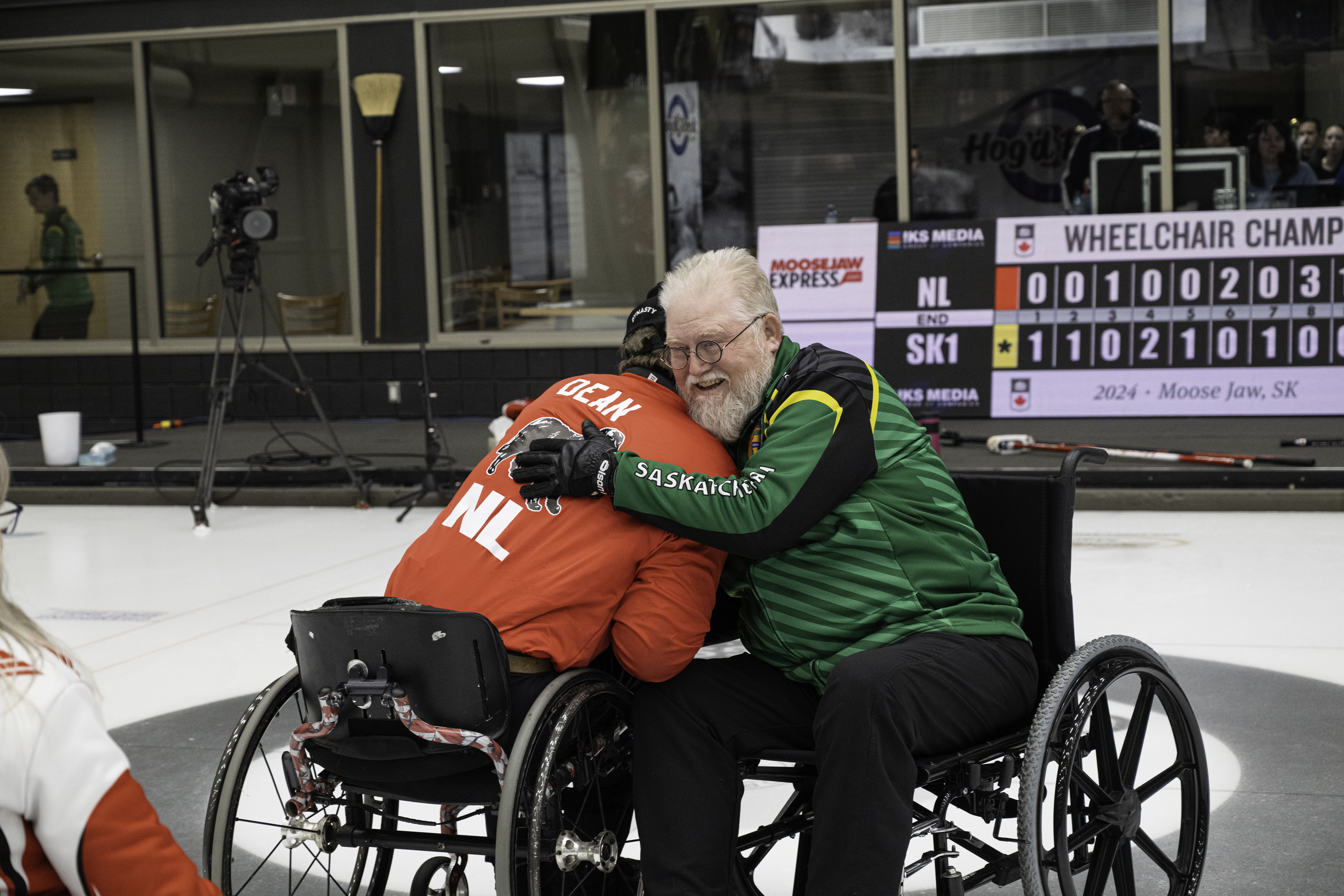
Volunteerism is a tradition. Expecting a small group of volunteers to carry ever-increasing burdens of a sport system is a habit.
Community is a tradition. Excluding people, whether intentionally or unintentionally, because they don’t fit yesterday’s image of a curler is a habit.
Our responsibility is not to defend everything old. Our responsibility is to understand why it existed in the first place and if the purpose still serves the future, protect it. If the purpose has changed, have the courage to evolve it.
That is not abandoning tradition. That is honouring it.
Curling is an identity
When people ask what makes curling different, they often point to the ice, the strategy, the screaming, the sweeping.
I think what makes curling extraordinary is much simpler.
Curling has always been about the community. It has always been a place where people feel they belong. Whether they arrive to a rink as lifelong curlers or step onto the ice for the very first time. Whether they have played every winter since they were kids or took 25 years off and are just getting back into it now. For generations, curling clubs have been gathering places where friendships are formed, families grow together, volunteers find purpose, and communities become stronger.
So, the Future of Canadian Curling will not be determined by how many curling clubs we have or how many Olympic medals we win or how many strategic plans we write. It will be determined by whether people continue to walk through the doors of curling clubs across this amazing country and think to themselves, “I belong here.”
If we lose that feeling, no strategy will save us. For generations Canadians who find a home with us don’t say, “I play curling”; they say, “I’m a curler.” That may seem like a small difference, but it reveals something much bigger. Playing a sport describes an activity. Being a curler describes an identity.
People don’t simply participate in curling. They become part of it. And that’s why The Future of Canadian Curling isn’t just about producing more players or medals. It’s about helping more people become curlers.
Because when someone begins to say, “I’m a curler,” they aren’t just describing what they do. They’re describing where they belong. And that we should never lose.
Reflection
Before continuing, ask yourself:
- Which traditions express the values of curling, and which merely reflect how things were done in another era?
- If a child walked into your club for the first time tomorrow, what would they remember 10 years from now?
- What parts of curling deserve not simply to survive, but to flourish?
- If we stripped away every trophy and every championship, what would still make curling worth protecting?
Community is not what it builds for itself, but what it leaves for those who come next. Community is curling’s superpower and competitive advantage, and it’s something we should never lose.
Knowing that, the future chapters will challenge us to change how we think about that community.
But first Chapter 3 will question an uncomfortable truth that we’ve been avoiding that might just be holding our community back.
The future of Canadian curling podcast - Episode 2
JOIN THE Conversation:
