



By: Nolan Thiessen, Chief Executive Officer, Curling Canada
A traveller, walking along a dusty road, came upon three people working in the same quarry. Each was cutting large blocks of stone under the heat of the sun. Each had the same tools. Each performed the same task. There was little difference between them.
Curious, the traveller approached the first stonecutter and asked, “What are you doing?”
Without looking up, the worker replied, “I am cutting stone.”
The traveller walked a little further and asked the second. “What are you doing?”
The second paused for a moment and answered, “I am earning a living.”
Finally, the traveller approached the third stonecutter and asked the same question.
The third looked at an enormous structure rising in the distance, smiled and replied, “I am building a cathedral.”
The three people were performing the same task. They were swinging the same type of hammer, doing the same work, and enduring the same difficult conditions. Yet each saw something completely different.
One saw a job. One saw a responsibility. One saw a purpose.
The difference was not in the work itself. The difference was in understanding what they were truly building.
What are we Bulding?
It’s a question that our curling system in Canada should be asking ourselves. It extends far beyond strategic plans, membership data, financial statements, championship schedules or organizational structures. Those matter but they are the practical realities that allow a sport to function efficiently.
They are not the reason a sport exists. The Brier or the Scotties are not the sole reason curling exists. So, it begs the question: why does the work matter? Why does curling matter?
And perhaps most importantly: What responsibility do we have to the generations before us and the generations who will come after us to the sport of curling?
Chapter one
Standing at the threshold of Transformation
Every generation inherits a sport. Every generation decides what to do with it.
INtroduction
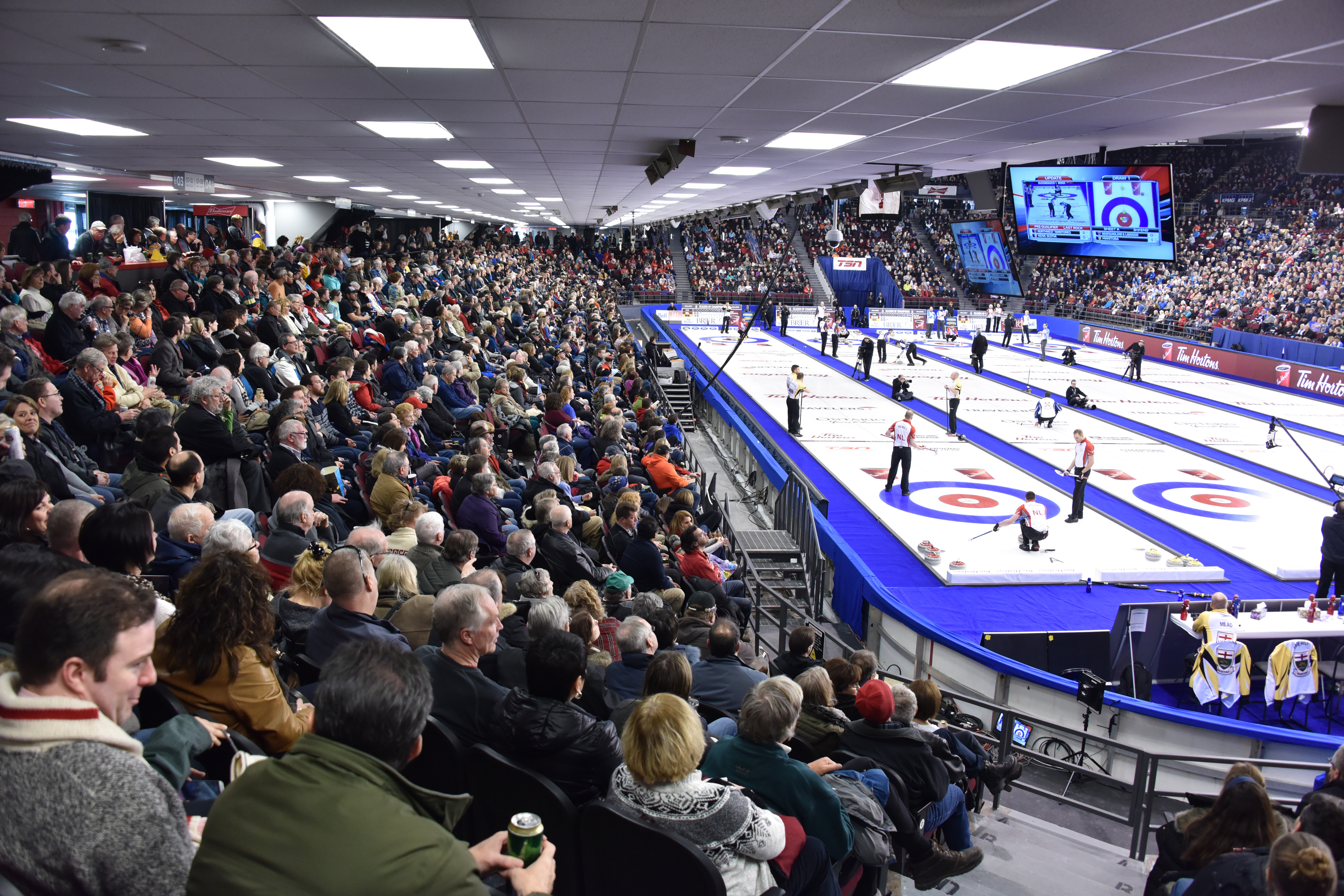
I wrote this Future of Canadian Curling series not just to provide answers or a foolproof plan. It’s meant to make us all think about the future of our great game and where we want it to go. It will roll out over the coming weeks and it will ask questions, it will talk about uncomfortable truths, it’s going to challenge how we think and feel, it’s meant to make us reflect, but most importantly it will go a few layers deeper so that we can challenge ourselves to improve while still being true to what has always made curling special.
I wrote this Future of Canadian Curling series not just to provide answers or a foolproof plan. It’s meant to make us all think about the future of our great game and where we want it to go. It will roll out over the coming weeks and it will ask questions, it will talk about uncomfortable truths, it’s going to challenge how we think and feel, it’s meant to make us reflect, but most importantly it will go a few layers deeper so that we can challenge ourselves to improve while still being true to what has always made curling special.
This series isn’t Nolan Thiessen, CEO of Curling Canada and former National Team Athlete telling everyone that I have all the answers, and I have “the playbook” for change; that if you just do these few things I think are best that all will be well and we’ll return to some form of the past that is unsustainable or impractical. There is no magic solution. If there were, we’d have done it already.
But what the series will do is share a few key thoughts in an attempt to create alignment towards common purpose, and in service of a better future for our game. I always tell people that my job is ultimately to leave curling in a better place than when I started. That’s it. That’s my job. And one of the reasons our game is so special, and what makes working in sport so special, is that there are so many people who want the same. Progress is never linear when you are in a sport system as large and complex as curling. This series is one of the first steps towards progress and trying to simplify the questions we should be asking so everyone can find their small place towards progress.
This series will talk about the underlying competitive advantage that is the true nature of curling and that we should never lose.
It will talk about the uncomfortable truth that we’ve all been avoiding.
It will talk about a sport that needs all three legs of a stool to be strong — People, Systems and Facilities. And how all three legs support the four pillars of any strong sport system; Grassroots development, High-Performance development, Systems development and Championship Events.
The series will talk about critical shifts in how we should think and how we ask questions of each other in service of a better curling and better sport system. The series will talk about a way forward and what we can all reflect on and go forward together.
I work in sport because I believe in the power of sport. I believe in what sport can do for physical, mental, emotional health and how it makes people’s lives better for being part of it. It did for me and I want it to continue to do that for others. I know that sport at its very best can be a community and nation builder. I work in curling because at its very best it can be a leader and all of the very best of those qualities.
I wrote this series because sport and curling matter.

Curling is a community institution
Sport is easy to call “just a game”. But curling has always been more than a “just a game” here in Canada. For those who have spent any time inside a curling club, that statement requires no explanation. It is inherently understood the moment you walk through the door and shortly after seeps into your bones.
It is found in the smell in the ice shed and, in the sound of the conversation echoing through the lounge after games.
It is found in the icemaker who braves an early morning Canadian winter to get to the rink to prepare the ice. It is found in the curler who spends 10 minutes to welcome a newbie and then shows them how to slide and deliver a stone safely.
It is found in the kid who finds this sport and can’t quite tell you why but feels like they belong here, regardless of how “good” they are.
It is found in the older curler who still comes to the club every week because the game provides something far greater than their weekly exercise.
It provides human connection. It provides community. And at its very best it provides a home.
For generations, curling clubs have quietly been some of Canada’s most important community institutions. Long before society began using terms like social connection, community wellness, belonging and intergenerational engagement, curling clubs were a place where all this was happening; we just never called it out. In urban and rural centres, from the Atlantic to the Pacific to the Arctic, this has been happening every day for well over a hundred years.
Curling is a place where a child can share ice with a grandparent. Where a newcomer could become a friend. Where competitors could congratulate an opponent. Where competitors sit upstairs afterwards and realize they have so much more in common than just their wonky inturns.
It’s a remarkable achievement that our sport can be a connector of all these great achievements. And it’s one we should never forget. We live in an often-divided world in which people are increasingly searching for connection, and curling has spent generations fostering it.
Are we telling the right story?
When conversations turn toward The Future of Canadian Curling, it’s human nature to begin with the challenges. They stand out. We all do it and I hear it when I discuss the game with almost anyone.
The increasing pressures facing volunteers. The cost of operating facilities. The changing expectations of society. The competition for people’s time. The international competition at the highest levels. The pathways for athletes, coaches and officials. The changing relationship between communities, municipalities and the organizations that serve them.
All of these conversations are important, necessary, and take place daily across this country.
But if we begin only with challenges, we risk telling the wrong story.
Because the story of curling is not a story of decline
It is not a story of failure. It is not a story of a sport that has lost its relevance or place in Canadian society. Our reality tells a far different story — one that might be hard to tell but is undeniably true.
Every year, in every part of Canada, millions of people still gather in curling clubs. They still lace up their shoes or pull on a slider or grab a delivery stick. They still debate strategy and shots they think they can make but might not be able to. They still celebrate the perfect freeze or the in-off double. They still laugh at the bad throws and complete misses. They still shake hands before and after games and say “good game” or “play well” to their opponents. They still experience the unique joy of a sport where excellence and humility exist together.
But most importantly curling brings communities together. Curling continues to provide something that many modern institutions struggle to create: a place where people feel they belong.
That is what makes me proud to be part of curling.
But there is an important distinction we must recognize. Curling is still strong, but the structures that supports curling must continue to evolve, adapt, change and improve.
Both of those can be true.
We are stewards of the game
The greatest compliment we can give previous generations is not that they built a perfect sport but that they built a sport that is worth improving.
They built clubs from empty buildings or from nothing. They created traditions that became part of Canadian culture. They established championships that created heroes. They volunteered countless hours because they believed that curling mattered.
They did not do these things because the path was easy. They did them because they understood something fundamental: that they were never owners; they were stewards.
And now, whether we recognize it or not, that responsibility has been passed to those of us who are part of the Canadian curling system today.
We are not here because those before us failed. We are here because they succeeded.
Their success created the opportunity for our generation to ask new questions. Not because the old questions were wrong, but because the world around us has changed and the community that they built is worth holding onto.
As we begin this conversation about The Future of Canadian Curling, we must be willing to ask ourselves difficult questions.
Not because curling is failing but because curling matters.
But are we measuring success of what truly matters? Are we creating opportunities for the people who will love this sport in the future, not just the people who love it today? Are we protecting traditions because they serve the purpose of curling, or simply because they are familiar? Are we willing to change before circumstances force us to?
And perhaps the most important question: if someone discovers curling for the first time 10 years from now, will they feel that this sport was built with them in mind?
Updating Curling’s software
We always think of software as something in the here and now, helping our smartphones or computers function today so we can stay in contact with the world or do our jobs. We mindlessly hit update on a software because our IT team told us to. But software is almost always just an improved version of older software. It’s almost never a complete rebuild. Modern software never deletes its history; it simply fixes, repairs and improves with each version.
We should look at curling the same way. This isn’t a debate about how we’ve always done it and whether we need to overhaul and start anew. Our sport carries the marks of every generation that has cared for it.
The volunteers who kept clubs open during difficult years. The coaches who have run junior leagues for years. The organizer who makes sure the local bonspiel hits its 50th season. The board members who made difficult decisions to ensure a club survived. The countless people whose names will never appear in a history book or on a trophy, but whose contributions are woven into the fabric of the sport.
We shouldn’t wish them away. We should honour them in the best way how.
But our communities have changed. Our families have changed. Volunteer expectations have changed. Technology has changed how people interact. The expectations placed on organizations have changed.
None of these changes means the past was wrong. They simply mean the conditions are different. The sport we inherited was built for the realities of previous generations. The sport we are responsible for today must serve the realities of future generations. We all still want curling to thrive; the intention has not changed, but the execution might have change.
And our responsibility is not to erase the past. Our responsibility is not to completely re-write the entire software and start over. It’s on us to add our own contribution to the story. To leave our own mark. To strengthen what we inherited so the next generation receives something even more valuable.
All the pieces matter
That responsibility requires humility. I assure you that Curling Canada doesn’t think it can do this alone. The organizations and clubs can’t do this alone. One club’s success is not always re-creatable in another community in Canada. No individual organization can create a healthier Future of Canadian Curling alone.
No club. No province or territory. No national organization. No athlete. No volunteer. No CEO.
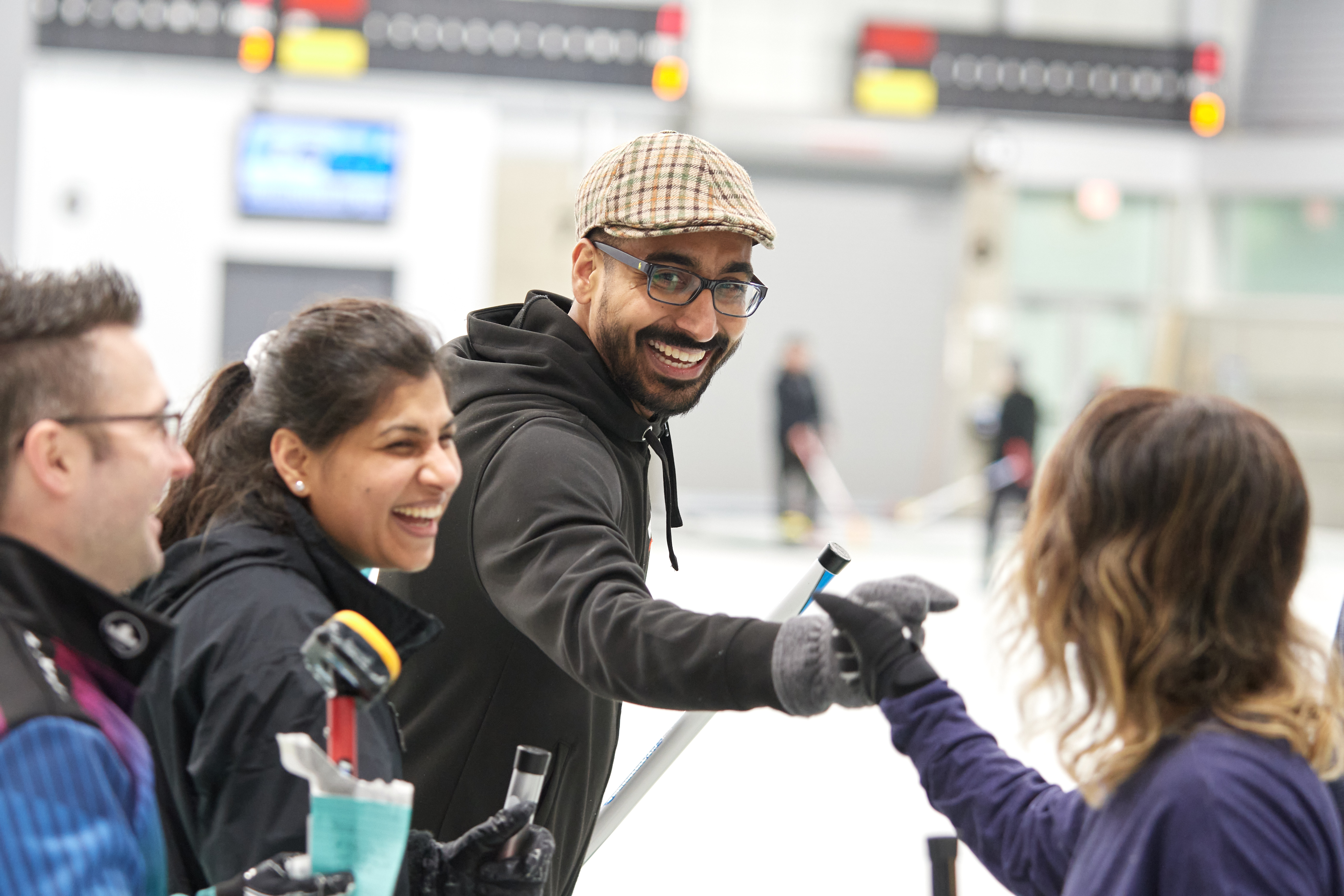
The Future of Canadian Curling will be shaped by thousands of small decisions made every day by people who care deeply about this sport. That is both the challenge and the opportunity and why I love this sport so much. Because there are so many people who want to contribute to that success.
The future cannot be built by asking one person or one organization to carry the entire weight. A system succeeds when everyone understands that their role matters and that their success is shared and that they are part of something larger than them.
How do we plan to pass the torch?
The Future of Canadian Curling has never belonged to any one generation. Every generation receives the sport as a gift. Every generation has the privilege of shaping its next chapter and one day, another group of leaders will lead this sport.
They will inherit the decisions we make. They will inherit the culture we create. They will inherit the opportunities we build. They will inherit the traditions we choose to strengthen and the barriers we choose to remove.
They will not judge us by whether we preserved everything exactly as it was. They will judge us by whether we understood our responsibility.
Whether we cared enough to improve.
Whether we had the courage to evolve.
Whether we left the sport stronger than we found it.
Because we are not the owners of curling. We are simply its current stewards.
And the privilege of stewardship is not found in holding onto something forever. It is found in preparing it for those who come next.
Reflection
Every chapter will have reflections at the end; questions to keep the conversations going and ask us to think about the current situation and what it means for the future. For Chapter 1 we ask:
- What are we truly building?
- What parts of curling represent its soul and must be protected?
- What parts of our system were created for yesterday’s challenges and may need to evolve for tomorrow’s opportunities?
- What will the next generation thank us for having the courage to do?
"The best time to plant a tree was twenty years ago. The second-best time is today."
The tree of curling was planted long before any of us were alive. Our responsibility is not to claim ownership of its roots but to continue to help it grow. Before we get there, Chapter 2 will talk about the Soul of Curling and what we should never lose.
The future of Canadian curling podcast - Episode 1
JOIN THE Conversation:
